Showing posts with label Hokkaido. Show all posts

Wednesday, August 6, 2014

Gotochi Travel Blog: Hokkaido, Part II

After all that time in the city, I was really excited to visit Akan National Park in eastern Hokkaido, which is known for being a great place for hiking, canoeing, and hot springs. Bus service is irregular, so we rented a car in Sapporo and drove across the island. It was about a four hour drive, but it was nice to see all the countryside. I even saw my first kitakitsune (Ezo red fox)!

キタキツネ
Photo by tetu

Ezo red fox is a subspecies found almost exclusively in Hokkaido.

Partway through the drive, we stopped for some Genghis Khan, or mutton cooked on a convex metal skillet, supposedly the way the Mongols cooked on their helmets back in the day. The dish is popular in Hokkaido.

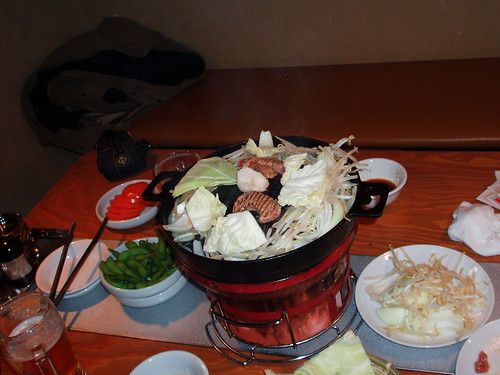
This is what ours looked like:

#1751 "Genghis Khan" lamb BBQ
Photo by Nemo's Great Uncle

We stayed at Lake Akan, where there is a hot spring resort and "Ainu Kotan," a village ("kotan" means "village" in the Ainu language) with a lot of tourist shops selling Ainu folk art and an Ainu museum. The Ainu are the native people of Hokkaido.

That brings me to the (possibly) controversial part of this post, because one of the things they sell in the village is bear carvings. Traditionally, bear carvings were reserved for religious items such as prayer sticks and headdresses. When ethnic Japanese took over Hokkaido in the late 1800s, they declared that the Ainu were Japanese subjects, and outlawed Ainu language and customs, including hunting and fishing, so the Ainu had no way to make a living. The Ainu people who worked for Japanese logging companies were viewed as dogs - less than human. Some Ainu turned to wood carving as a way to survive. They took what had been religious items and sold them as tourist souvenirs. Umetaro Matsui, an Ainu bear hunter, became a well-known carver of wooden bears.

Source: Old Photos of Japan


Posta Collect, in their description of the bear carving, completely erase the Ainu. According to Posta Collect, the image originated in souvenirs brought to Japan from Europe. They mention Umetaro Matsui, but not that he was Ainu. Shame on you, Posta Collect. This is a stunningly obvious example of the racism faced by the Ainu today.

No wonder this bear looks like he is crying.

20100510
Photo by Sebastian Tauchmann

Thursday, August 22, 2013

Gotochi Travel Blog: Hokkaido, Part I

There were many surprises in store for me on this leg of the tour. When I thought of Hokkaido, I always thought of volcanoes, national parks, snow, and the Ainu people. The gotochi for Hokkaido don't show any of those things. But, since I set out on this journey to discover Japan via gotochi, I tried to remain faithful to that. So, even though I thought I would visit Hokkaido in the middle of the summer, I went in May, so I could see the Lilac Festival in Sapporo.

Lilacs are actually some of my favorite flowers. At home, they bloom around the end of April, just in time for my birthday. It's a bit colder in Hokkaido so it takes them a little longer. This was the 55th year of the Lilac Festival in Oodoori Park, which spans the middle of downtown. There are at least 3 other festivals at Oodoori park that are more famous than this one. The lilac festival is actually a lot more than just blooming flowers, though. There were a bunch of musical performances, food stalls, tea ceremony, and even a flea market. Unfortunately, this event is so non-famous that even the official website doesn't have any decent pictures to showcase.

But! One of the things they sold at the food stalls was Hokkaido sweet corn. Naturally.

famous Hokkaido corn
Photo by Justin Cozart

Hokkaido sweet corn is called "toukibi." It's roasted and covered in butter and soy sauce.

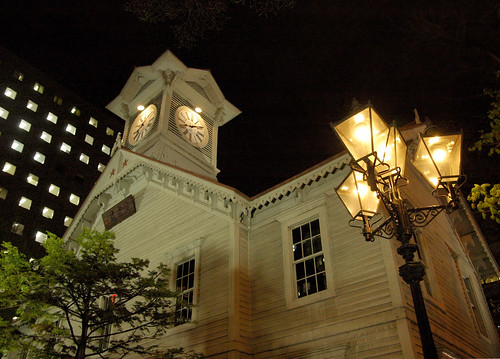
There was one place in Sapporo I still needed to see: the clock tower.
The American-made clock tower is one of the oldest buildings in Sapporo and one of the few remaining western-style buildings there. Built in 1878, it was part of the drill hall of Sapporo Agricultural College. The clock still keeps the time and chimes every hour.

札幌時計台 Sapporo Clock Tower
Photo by Autan

Stay tuned for a bit more controversy (maybe) in the next Hokkaido post.