Showing posts with label Japan. Show all posts

Wednesday, August 6, 2014

Gotochi Travel Blog: Hokkaido, Part II

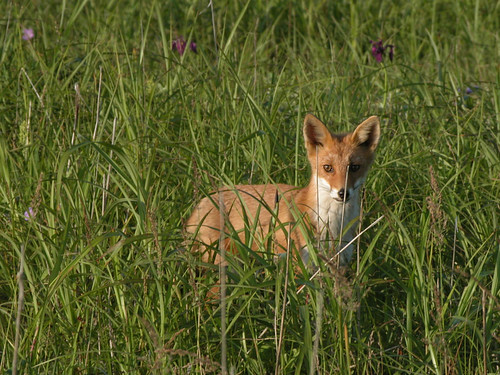
After all that time in the city, I was really excited to visit Akan National Park in eastern Hokkaido, which is known for being a great place for hiking, canoeing, and hot springs. Bus service is irregular, so we rented a car in Sapporo and drove across the island. It was about a four hour drive, but it was nice to see all the countryside. I even saw my first kitakitsune (Ezo red fox)!

キタキツネ
Photo by tetu

Ezo red fox is a subspecies found almost exclusively in Hokkaido.

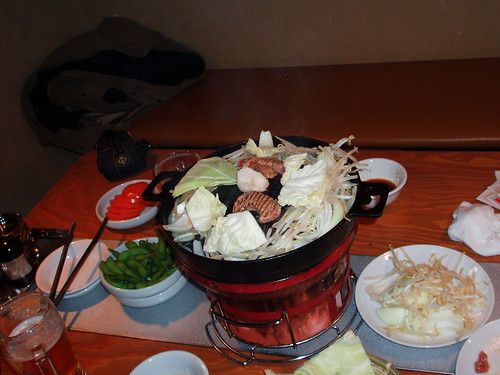
Partway through the drive, we stopped for some Genghis Khan, or mutton cooked on a convex metal skillet, supposedly the way the Mongols cooked on their helmets back in the day. The dish is popular in Hokkaido.

This is what ours looked like:

#1751 "Genghis Khan" lamb BBQ
Photo by Nemo's Great Uncle

We stayed at Lake Akan, where there is a hot spring resort and "Ainu Kotan," a village ("kotan" means "village" in the Ainu language) with a lot of tourist shops selling Ainu folk art and an Ainu museum. The Ainu are the native people of Hokkaido.

That brings me to the (possibly) controversial part of this post, because one of the things they sell in the village is bear carvings. Traditionally, bear carvings were reserved for religious items such as prayer sticks and headdresses. When ethnic Japanese took over Hokkaido in the late 1800s, they declared that the Ainu were Japanese subjects, and outlawed Ainu language and customs, including hunting and fishing, so the Ainu had no way to make a living. The Ainu people who worked for Japanese logging companies were viewed as dogs - less than human. Some Ainu turned to wood carving as a way to survive. They took what had been religious items and sold them as tourist souvenirs. Umetaro Matsui, an Ainu bear hunter, became a well-known carver of wooden bears.

Source: Old Photos of Japan


Posta Collect, in their description of the bear carving, completely erase the Ainu. According to Posta Collect, the image originated in souvenirs brought to Japan from Europe. They mention Umetaro Matsui, but not that he was Ainu. Shame on you, Posta Collect. This is a stunningly obvious example of the racism faced by the Ainu today.

No wonder this bear looks like he is crying.

20100510
Photo by Sebastian Tauchmann

Thursday, August 22, 2013

Gotochi Travel Blog: Hokkaido, Part I

There were many surprises in store for me on this leg of the tour. When I thought of Hokkaido, I always thought of volcanoes, national parks, snow, and the Ainu people. The gotochi for Hokkaido don't show any of those things. But, since I set out on this journey to discover Japan via gotochi, I tried to remain faithful to that. So, even though I thought I would visit Hokkaido in the middle of the summer, I went in May, so I could see the Lilac Festival in Sapporo.

Lilacs are actually some of my favorite flowers. At home, they bloom around the end of April, just in time for my birthday. It's a bit colder in Hokkaido so it takes them a little longer. This was the 55th year of the Lilac Festival in Oodoori Park, which spans the middle of downtown. There are at least 3 other festivals at Oodoori park that are more famous than this one. The lilac festival is actually a lot more than just blooming flowers, though. There were a bunch of musical performances, food stalls, tea ceremony, and even a flea market. Unfortunately, this event is so non-famous that even the official website doesn't have any decent pictures to showcase.

But! One of the things they sold at the food stalls was Hokkaido sweet corn. Naturally.

famous Hokkaido corn
Photo by Justin Cozart

Hokkaido sweet corn is called "toukibi." It's roasted and covered in butter and soy sauce.

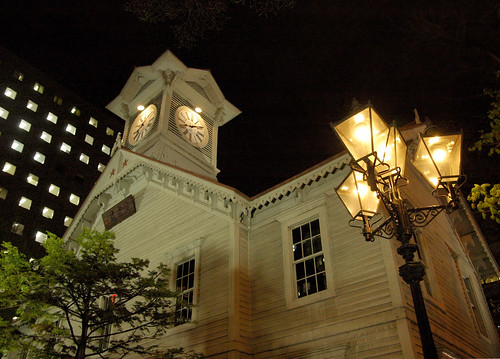
There was one place in Sapporo I still needed to see: the clock tower.
The American-made clock tower is one of the oldest buildings in Sapporo and one of the few remaining western-style buildings there. Built in 1878, it was part of the drill hall of Sapporo Agricultural College. The clock still keeps the time and chimes every hour.

札幌時計台 Sapporo Clock Tower
Photo by Autan

Stay tuned for a bit more controversy (maybe) in the next Hokkaido post.

Friday, August 16, 2013

Gotochi Travel Blog: Nagano, Part II

From Matsumoto we went to Kamikochi, which is inside Chubu Sangaku National Park. No private cars are allowed inside the park and we had to take a bus from Matsumoto Station. The bus station had a food stall selling some yummy snacks I had never tasted before - oyaki.
Oyaki are kind of like Chinese baozi, but the dough is made with buckwheat flour and they are stuffed with all kinds of goodies. My favorite is kabocha squash!

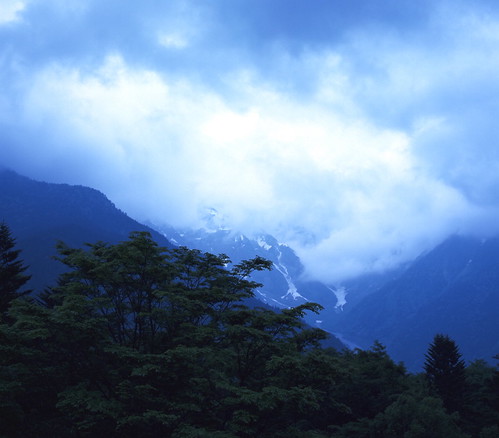
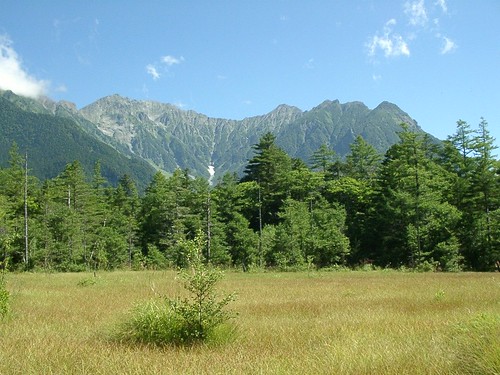
Kamikochi is high in the Japanese Alps, surrounded by Nishihotakadake (2909 m), Okuhotakadake (3190 m), Maehotakadake (3090 m) and the active volcano Yakedake (2455 m).


Misty Morning in Kamikochi
Photo by Joi

A short walk from the bus terminal is Kappabashi, a suspension bridge over the Azusa River. A kappa is an imaginary creature said to be human-like but in reptilian skin. It lives in water and lures unsuspecting visitors in so it can eat their livers. We didn't see any kappa there, though. We mostly saw trees - deep forests of Keshou Yanagi (a kind of willow, Chosenia arbutifolia) and Japanese larch trees surround the bridge.

We hiked further in, to the tranquil Myojin Pond. We stayed overnight at a little lodge called Kamonjigoya and spent the whole next day hiking.


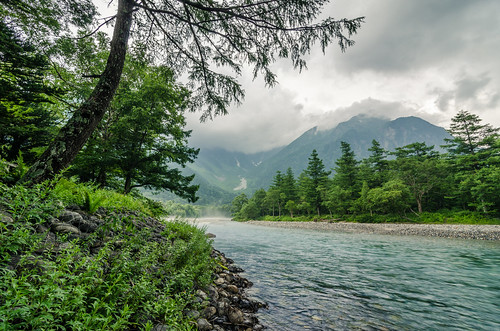
Kamikochi On A Cloudy Day
Photo by Les Taylor

Kamikochi.
Photo by Kazuhiko Teramoto

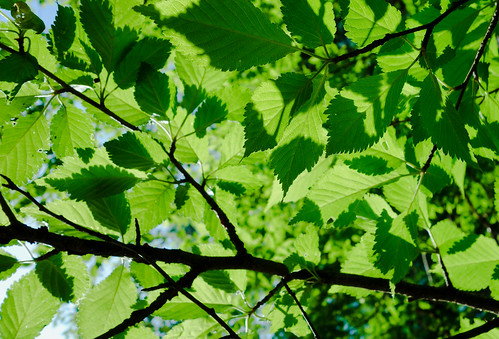
Vein of the Leaves
Photo by Maiko Aizawa

I was hoping to see a wild kamoshika, because the website for Kamikochi has a picture of one, and it's on one of the Nagano gotochi.
But we didn't. The English name for kamoshika is Japanese serow (Capricornis crispus). They look kind of like a cross between a goat and an antelope. Maybe next time I'll see one...

Speaking of next time, leave me a comment and tell me which prefecture you think I should visit in my next fake travel blog!

Saturday, August 10, 2013

Gotochi Travel Blog: Nagano, Part I

My tour of all 47 prefectures of Japan via ご当地フォルムカード (regional shaped cards) begins in Nagano. First, we visited Matsumoto castle in the city of Matsumoto.
国宝松本城


Matsumoto Castle is also called Karasu-Jou or "Crow Castle" because of its black exterior. Along with Himeji Castle, Inuyama Castle, and Hikone Castle, Mastumoto Castle is designated a National Treasure of Japan. It dates from the 16th century, and the keep still has its original wooden interior and stone exterior. Inside the castle is a gun museum.


Photo by Haru

During the Meiji period, the keep started to lean to one side. People said it was because of the curse of Tada Kasuke. Tada and a group of other farmers met at Kumano shrine in 1686 about an exorbitant tax increase. They brought their letter of appeal Matsumoto Castle expecting to turn it in peacefully to the magistrate, but when the peasants heard about his plan, they revolted, robbing stores and attacking the merchants. The executives of the domain agreed to lower the taxes, but a few weeks later Tada and the other farmers were arrested and executed without trial. (The keep was actually structurally deficient at the time, but the story is more interesting. Good thing the keep has since been restored, because we climbed all the way to the top!)

We went to the castle by bicycle from the train station, so I was quite hungry by the time we got back to town. The area is famous for two foodstuffs: basashi (raw horse meat) and wasabi (home to the world's largest wasabi farm). I passed on both and got a big bowl of soba (buckwheat) noodles instead, my fave. For dessert we picked up some delicious Nagano apples from the shopping arcade.
 
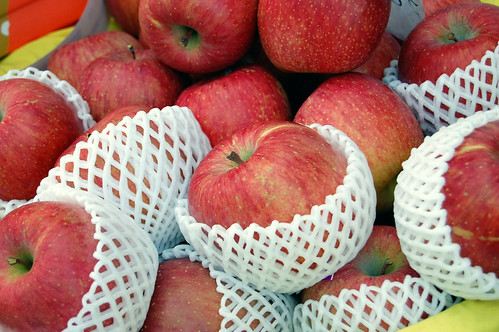
りんご


Apple cultivation in Nagano dates from 1874, when the Ministry of the Interior delivered three apple seedlings to Nagano. Mmmm.

Shinshu Ringo
Photo by jpellgen


Next stop: Kamikouchi.

Thursday, February 21, 2013

Happy Lunar New Year - Year of the Snake

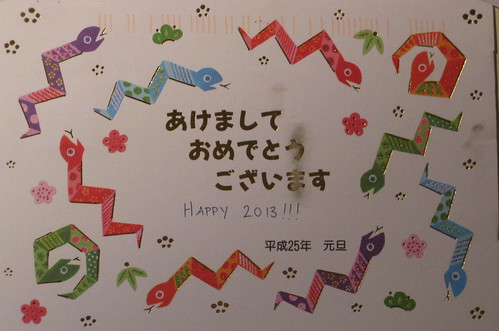
IMG_7968
A Japanese new year card featuring this year's zodiac animal, the snake.

I know I am a bit late, but I figure it's still okay to wish everyone a happy Lunar New Year 2013 - Heisei 25.
Thanks Lara. ♥

Two definitive stamps.

Friday, December 7, 2012

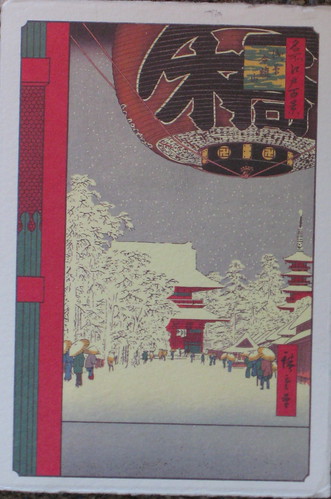
Sensoji Temple, Tokyo

IMG_1065
The 100 Views of Edo: Sensoji Temple at Asakusa
by Utagawa Hiroshige (1797-1858)

This postcard shows a famous woodblock-print by one of Japan's most famous ukiyo-e artists. Hiroshige was born the son of a samurai in Tokyo (then called Edo). He followed in his father's footsteps to become a firefighter, dedicated to protecting Edo Castle from fire. However, his salary was small and he took to art to supplement his income. The series of 100 views of Edo was produced over a three year period from 1856-1859, and was completed by Hiroshige's pupil after his death. This painting is number 99 in the series (there are actually more than 100 of them).

I've been to Sensoji several times, but it seems I don't have any pictures of it. It's one of the best places in Tokyo to buy souvenirs, as they have different types all in one place. And you can buy a candle or incense to make an offering, or buy a luck charm. I've never seen it covered in snow like this, though.

The stamp is from the series "Anime Heroes and Heroines," issued in October 2009. This one is Sai from Naruto.

Friday, July 6, 2012

Watercolor Watermelon

IMG_4798

あしたはあしたの風がふくのだ。
Tomorrow, tomorrow's wind will blow.

I got this postcard from my dear friend Lara nearly a year ago. It seems like a good day for watermelon (summer weather!) and a good day to post this card. The artwork is by Miki Yuuseki.

The stamp is the great tit definitive seen here.

This is a post for Postcard Friendship Friday, hosted by Beth. Click the logo to visit and join in.

Saturday, February 4, 2012

Okayama, Japan


Takuhatsu, Sogenji Monastery. Resident monks beg for alms at a Zen temple in Okayama, Japan.

The first stop on my trip was Sogenji. Sogenji is a Zen temple and monastery in Okayama, Japan, where the roshi (Zen teacher) carries out his mission to teach Zen to Westerners. As you can see, most of the residents there are non-Japanese, primarily Americans and Europeans. During my time studying abroad in Japan, I had the opportunity to stay at Sogenji for one month during our school spring break. Although I was not allowed to go to individual audiences with the roshi (sanzen, the heart of direct Zen training) at that time, the experience was ... indescribable. I returned to Sogenji to live and train for three months at the end of 2007, and in November of that year I began to receive sanzen. I have since been back a number of times, and try to stay for a couple of weeks every time I visit Japan.

There are no commercially printed cards of Sogenji (it's hard enough to find cards of Okayama). I had these cards printed. The photograph is from one of the Sogenji monks, and the design of the card is mine. (I originally had 100 of these printed, but I have been sending them in postcrossing, and the rest of the ones I had, I left for the people at Sogenji to use. I am going to have more printed, so if you would like one, leave me a comment.)

Takuhatsu is indeed the practice of begging for alms. The monks go out into the community three times per month for the purpose of collecting donations. They wear the robes of ordained Zen monks (even those who are not ordained do so for takuhatsu only), and special sandals and hats, and carry begging bags with the name of Sogenji on the front. At each house or place of business, one of the monks stands in front and chants "hō" three times. Often, someone comes out and places money or rice in the begging bag, and for each donation, the monk chants a special takuhatsu sutra. The head monk collects all the money when they return to the temple, and it is used to buy tofu and other necessary supplies.

I also had the opportunity to go on takuhatsu at Sogenji. I don't have a photo of takuhatsu-me on this computer, so instead, here is a photo of the others going on takuhatsu, on a day I did not go (2007).


This year, I was at Sogenji for winter solstice, Christmas, and New Year's, all of which are celebrated in various ways. Here is a photo from this year's winter solstice feast. Winter solstice comes shortly after two intensive meditation retreats, and they have a huge party. Although for most of the year, meals consist largely of food that is donated or grown at the temple (a lot of potatoes, eggplant, and cabbage, along with a lot of food that is about to turn moldy or already is partly rotten), on solstice, everyone is allowed to make their own favorite dish from their country or culture, and the roshi, as a sort of holiday gift, buys all the necessary ingredients. Since Sogenji is home to people from all over the world, the feast is truly something to behold. The dishes barely all fit on the table.


Tojitoya 2011

New Year's is a big deal in Japan. Families gather on the morning of the 1st to eat traditional New Year's cuisine, featuring mochi (pounded glutinous rice cake). Mochi is also used for New Year's decorations, along with pine branches (the word for pine in Japanese is a homonym for the word for "end" as in "end of the old year"). At Sogenji, they decorate with -- and eat -- a lot of mochi. It took us around six hours to pound it all.


Pounding the cooked rice into mochi


Post-pounded mochi


Forming the pounded mochi into balls.

On New Year's Eve, the bell in the bell tower is rung 108 times, culminating at midnight. Actually we did not ring the bell; instead, we greeted guests from the community who came to ring it, and we chanted the bell sutra each time.

Over the first few days of January, Japanese people make their first shrine or temple visit of the new year, called hatsumōde. At Sogenji, most of the monks rest or watch movies during this time, except during their tea-serving shift, when they wear their nice clothes and serve matcha and sweets to guests of the roshi. I had never served matcha before and had to learn the proper way to mix it, deliver it, and take away the dishes again at the end.

I am very grateful to have had the opportunity to experience this season at Sogenji. As always, it is an incredible gift to be a part of the One Drop sangha, which I hope to never, ever take for granted.
♥

This stamp is #9 in the 10th issue of a series called ふるさと - 心の風景 (hometowns - scenes in my heart). This issue showcases scenes from Nagano, Niigata, and Yamanashi prefectures, and this stamp, from Yamanashi, is entitled "富士を見える町" (town with a view of Mt. Fuji). I bought the whole souvenir sheet just to bring home for me, so I will probably post that at some point.

Saturday, August 20, 2011

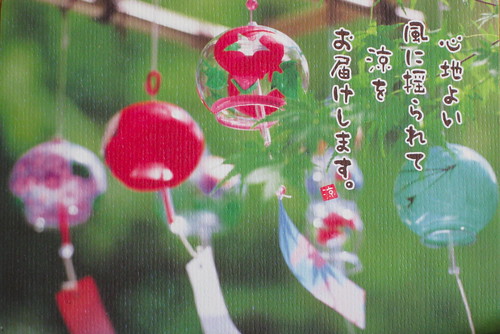
風鈴

Wind Chimes
JP-173758 from Masa in Tokyo. These are fuurin, Japanese wind chimes, which are hung under the eaves of Japanese houses for summer. Summer weather has *finally* arrived here and today is another perfect Seattle day. I went out for a walk earlier but unfortunately my knee is injured and I can't exercise much. :(

Anyway, the fuurin at JR Mizusawa Station in Iwate Prefecture are listed as one of the "100 soundscapes of Japan," which were selected to represent pleasing natural and cultural sounds in order to promote "rediscovery of the sounds of everyday life" and combat noise pollution. Is it just me, or is that kinda, well, Japanese?

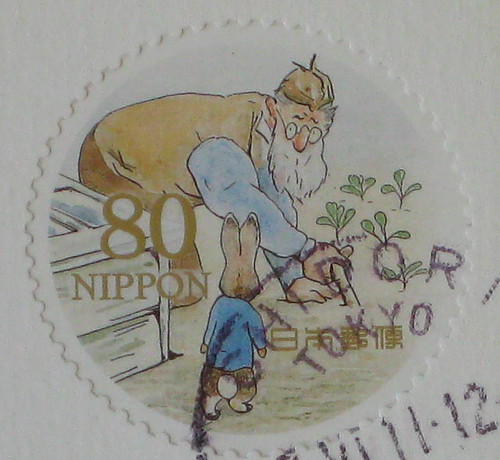
This is from a 2011 souvenir sheet on Peter Rabbit. This one shows Peter meeting Mr. MacGregor.
IMG_4521

Sunday, June 19, 2011

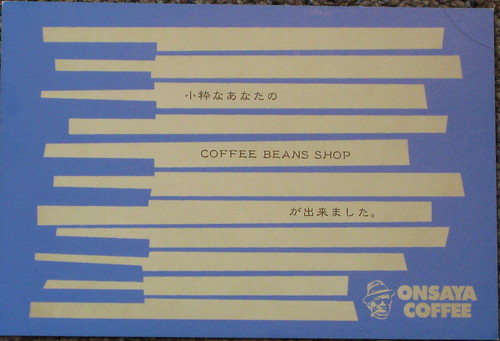
Onsaya Coffee

IMG_1069

I found this ad card at The Market in Okayama, Japan. It can be hard to find really interesting cards in Japan, and most commercial cards are very expensive, so I was happy to find a nice selection of cool ad cards for free here. This was my favorite one, so I kept it.

The Market was a little vegetarian cafe between Okayama Station and the international center, and I would go there most free days with Bue, Chris, and Stefan when we were all at Sogenji. I went back last spring when I was visiting Sogenji. Their avocado "juice" was as intense as ever, but it was kind of lonely.

The Market blog.

Saturday, March 12, 2011

もののけ姫

I am sure you are all aware of the disaster that struck Japan yesterday. An earthquake of magnitude 8.9 centered in the Pacific Ocean off the coast of Japan's Tohoku region spawned a tsunami, devastating northern Japan. A tsunami warning was issued for most of the Pacific - including the American Pacific Coast - and aftershocks continue to cause damage and fear all over Japan. Safety features at some nuclear power plants in Tohoku have failed and there is a serious danger of radiation poisoning for people nearby.

I lived in Japan for one year and I have a number of close friends there - mainly in Tokyo and Okayama. Luckily, none of them live in Tohoku. The damage in Tokyo was minimal, although the transportation network stopped running and most people had to spend the night at their workplace. I have heard from all but one of my friends in Tokyo that they and their families are okay. Points south, including Okayama, seem to have been mostly unaffected.

I looked through my cards from Japan to see if I had one to post today. I have no cards from the Tohoku region, and I already posted this card, but after considering, I decided to post this one.


I received it last November from Chiaki for the wishlist tag. It shows a scene from the movie Princess Mononoke, an anime from famous director Hayao Miyazaki. This movie is somewhat well-known even in America, having won the Academy Award for best foreign film the year it was released, and is one of my favorite movies.

In the picture, Ashitaka, the hero, is carrying an injured man back to the man's home, guided by the little white forest spirits called kodama. The card is appropriate because it tells the story of a world going haywire when people mess with the natural order of things. At the end of the movie there is something like a nuclear meltdown which covers everything in poisonous black goo. However, amidst the destruction, a few kodama remain uninjured, signalling hope that the world can survive.

Two special old stamps. The one on the left is from 1975, the one on the right from 1994. I don't have the energy to try to look them up now...


I have been dealing with some personal disasters in my own life and this has put them in perspective, but part of me feels like this is the start of a disaster affecting the entire world, inside and outside. Like maybe I better start telling all the people I love that I love them.

Everyone, take care and stay safe. And remember, don't ever take this life for granted.

Monday, September 20, 2010

Okayama, Japan

As a few of you know, I spent various amounts of time living at a Zen temple in Okayama, Japan, the longest period for 3 months in 2007, and most recently for 10 days back in April. I can talk all about that in another post (and now that my selfprinted cards of Sogenji arrived, I have just the card to post in that post!), but I wanted to post these two cards that I sent from Okayama. Both are from a box of cards of the Korakuen, Okayama's famous garden. It can be hard to get postcards in Japan--these were the nicest ones that they had for sale at Okayama station, and they came in a box, all with these huge white borders around them. :/ The first is the very first card I sent from that trip, home to my two-year-olds, to let them know that I had arrived safely.

"Beautiful Lotus Flowers in Korakuen Garden and Okayama Castle"

Okayama castle was the stronghold of the Ikeda clan for most of Japan's feudal age, and the garden is the handiwork of one of the Ikedas, used as a personal spa by the daimyo, and for entertaining guests. I've never actually been inside either Korakuen or the castle, but I did bicycle right past the castle countless times on my way to the international center every free day. Actually one of the things I remember really fondly about Okayama is that bike ride... up over the Higashiyama hill, down the other side and all the beautiful fall leaves on the trees, past the playfields and the schools, over the Asahi River, watching for herons fishing, couples out in the swan boats, and the view of the castle up on the hill. Then I would turn from the main road onto the path through the park, passing people of various ages out walking, along the river, past the castle entrance, before turning again into downtown Okayama, through to the station, under the underpass, past the Market, and all the way to the international center where wireless awaited.

Besides that, Sogenji is also tied up in Ikeda-clan history: it was the family's summer-castle and hideaway in the mountains when enemies threatened. The graveyard behind Sogenji originally contained the remains of some of the feudal lords; now most of the remains have been removed to museums, but the graveyard is still there. Still bathed in sunlight on clear-weather afternoons, a quiet place to go sit, meditate or read or nap; still a haven for a wild mountain dog and her pups.

"A Scene of a Weeping Cherry Tree and Eisho Bridge in Korakuen Garden"


I was mailing these on my way to or during my stay at Sogenji, and thus could not spare any time at the post office for commemorative stamps. On the right is the normal stamp for the international postcard rate, featuring the great tit (it's a kind of bird, okay!). On the left is one of the normal stamps for the domestic letter rate (yes, it's more than an overseas postcard, and yes, I overpaid on postage), featuring the rufous turtledove.

Tuesday, August 17, 2010

Hokusai's Great Wave


The 36 views of Mt. Fuji: The great wave off Kanagawa
By Katsushika Hokusai (1760-1849)

I had the opportunity to see the actual print of this work when I was in Japan in 2007. It was... small (only 25.7 cm × 37.8 cm). However, this print is almost certainly the most famous Japanese artistic work, and it was really cool to see it in real life. I have a scarf with this printed on it, and I was happy to get it also on a postcard, from my former housemate Kaori. The card itself has a really nice texture, almost like washi (Japanese paper).

On the right you have the definitive for the 20yen rate, featuring the Japanese honeybee (Apis cerana japonica).
The stamp on the left is from a set of five issued this year for National Letter-Writing Day. Each stamp in this set is from the series of "100 poems by 100 famous poets" that is also a card game. This one is poem #72. I haven't been able to find any English translation of it online.

Monday, July 5, 2010

Himeji Castle, Japan

This card came as an official, JP-98872, and was waiting for me the day I returned from my Asia trip this spring. I had bought this exact card in Japan and sent it to someone as an official from there a week earlier...


Himeji Castle in Himeji, Hyogo Prefecture, is a UNESCO world heritage site. It is sometimes referred to as the "White Egret Castle" or "White Heron Castle," and you can see why. It is considered the finest remaining example of 17th century Japanese castle construction and is the most-visited castle in Japan.

First built in 1346, Himeji Castle housed and protected various daimyo (regional rulers of feudal Japan) for the next 500 years. After the Meiji Restoration in 1867, the new Japanese government sent the Okayama army to shell the castle with blank cartridges and drive its occupiers out. It was then sold at auction for the whopping price of 23 yen (approximately US$1100 in today's money).

Himeji Castle's architecture incorporates many defense techniques, including loopholes for archers to fire through, angled chutes for dropping stones or boiling oil on attackers, and a confusing maze of paths towards the main keep, so that any attacking force could be watched and fired on for its entire journey inwards. While the castle was never attacked in this manner and thus the system was never really field-tested, even today with the route clearly marked, many visitors have trouble navigating the castle complex. (According to wikipedia.)

The stamp shows a scene from The Tale of Genji, the world's first novel, written by a Heian Period noblewoman.